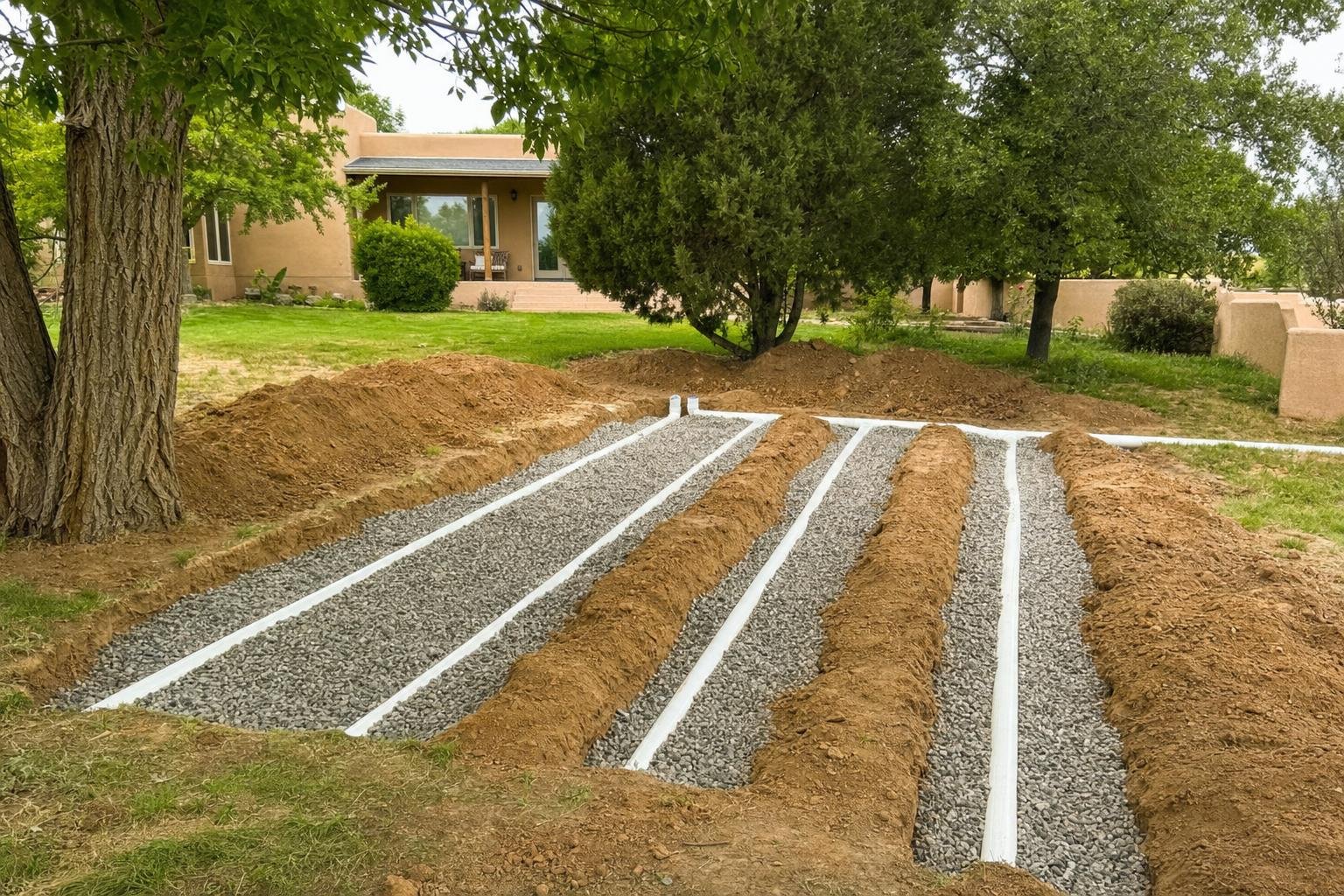
We take on the full job when the existing lines can no longer handle the flow and the soil around them has stopped working.
When the drain lines fail
The job comes up when the absorption area can no longer accept the household's daily wastewater. At that point the lasting fix is to put in new trenches, not keep patching the old ones. Replacing the field is the biggest job on a septic system, so we want you to see the whole picture before any ground is opened.
See also a septic system inspection. Ready to hire for septic tank pumping in Pueblo? Start with our home page.
More answers: What Happens During Septic Tank Pumping: The Steps Explained · Septic Tank Pumping Pricing: What Drives the Number Up or Down
Checking soil on the specific lot
Soils across Pueblo County are generally well drained with a silt-loam surface, with Manvel, Minnequa and Penrose among the most common types. That is a good starting point, but we check your lot instead of assuming every excavation drains the same way. We also schedule around moisture. Pueblo gets about 28 inches of snow a year, with January the heaviest month, so spring melt can leave ground too wet to work. We do not dig trenches when the soil is wet enough to smear or compact, because smeared trench walls and a compacted bottom hurt how the new field takes water. If the ground is too wet, we wait.
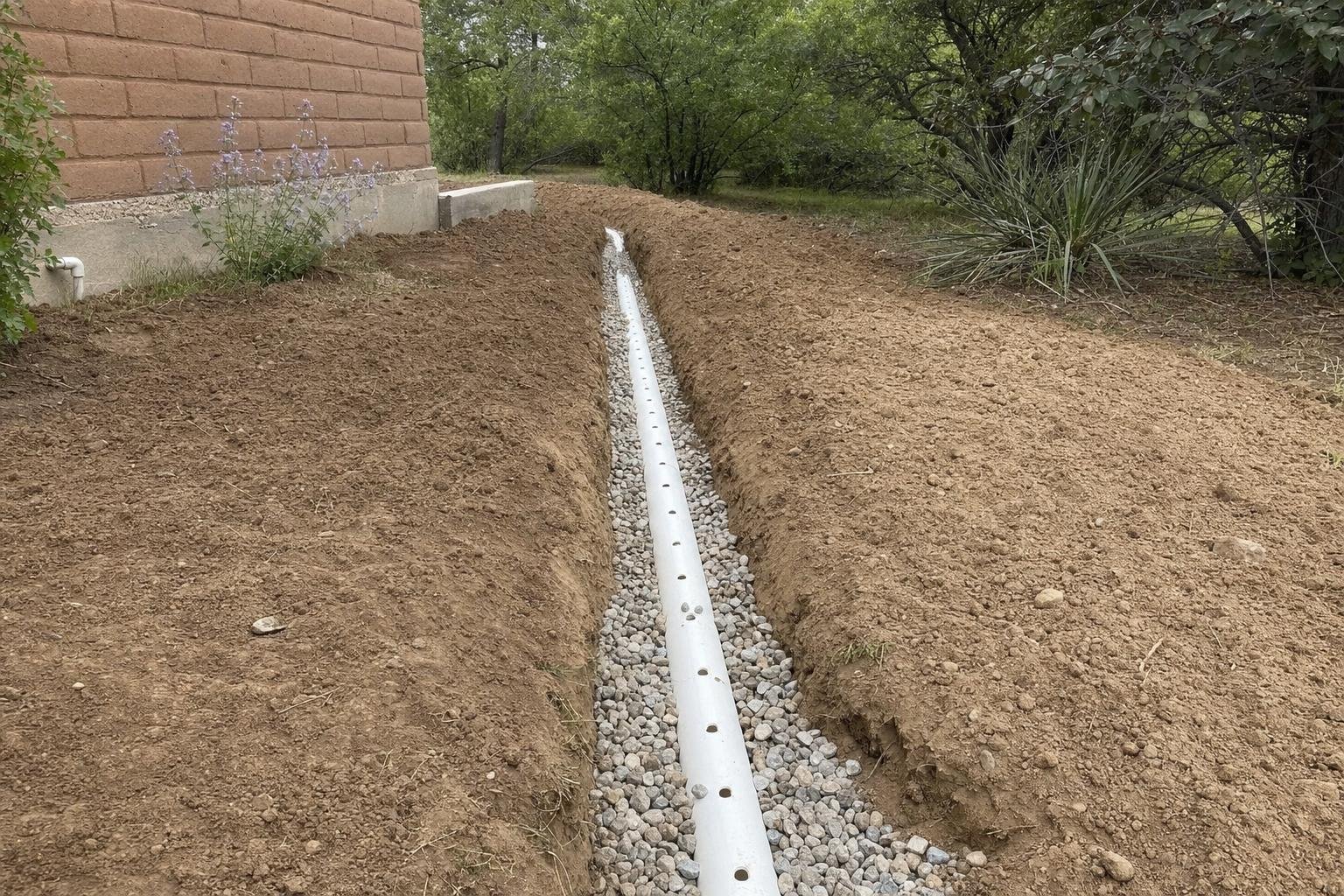
Installing the pipe and aggregate
Once the soil is workable we open the trenches and set perforated pipe centered in each one. Washed aggregate, ½ to 2 inches in diameter, goes beneath, around and over the pipe as specified for the system. We also bring sand fill for the job.
Range for a full replacement
Full drainfield replacement typically runs $3,000 to $15,000. Call and we'll talk through where your system likely falls in that spread. Field size and whatever turns up once the ground is open set the final figure, and we put it in writing, itemized, once we've seen the job.
What Goes Into the Work
In detail, parts of it look like this:
- Have the required excavation and drainfield-placement inspections completed before covering the work; inspect the distribution device to confirm effluent flows to the trenches as intended.
- After required approval, cover the installation, direct surface water away from the field, and document the installed field location.
Questions Welcome
A two-minute call is all it takes, and you decide what happens next.