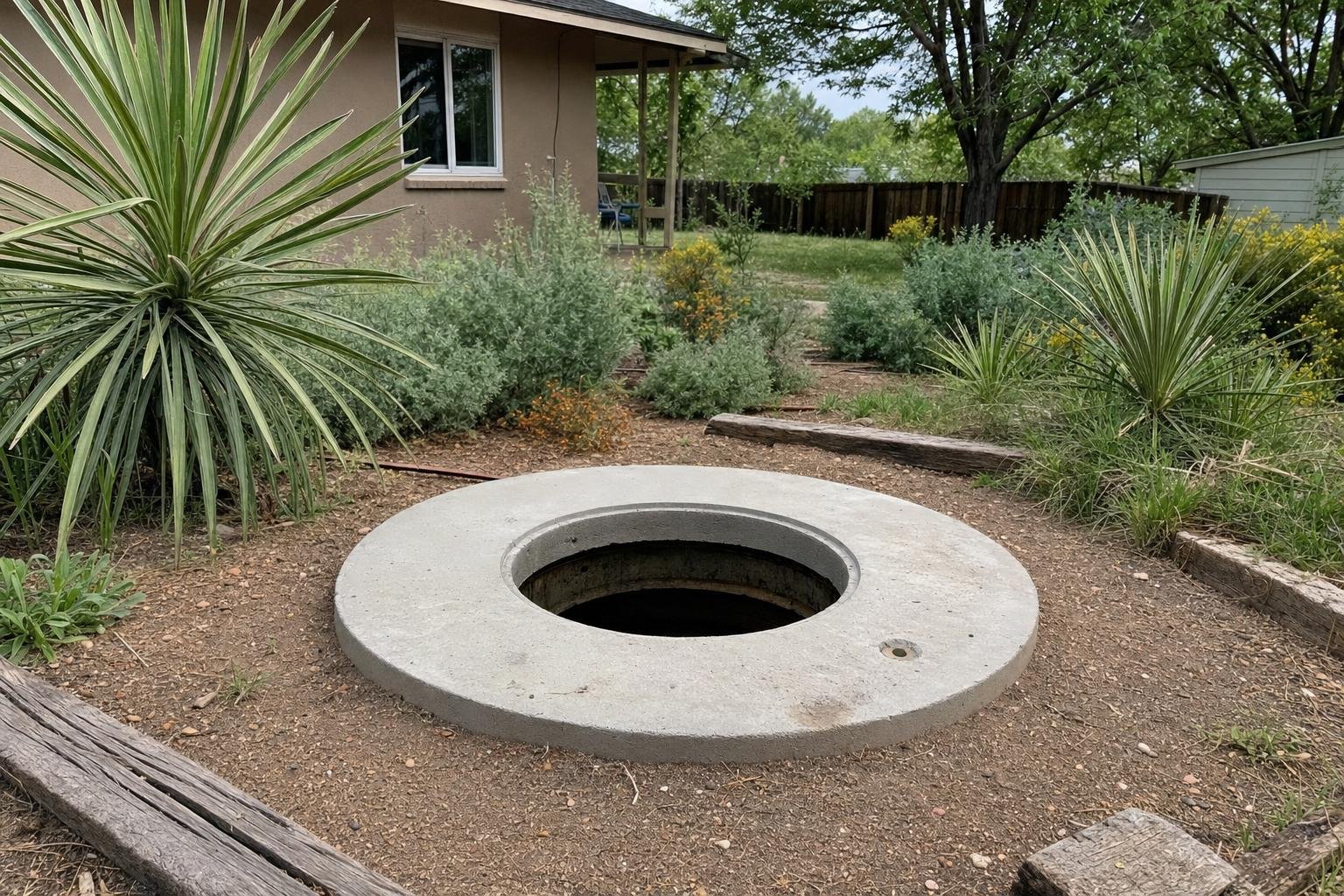
The median house in Pueblo dates to 1966, which means many of the tanks and drainfields we open have decades of use behind them. Before we talk pumping, we look at how the drainfield is handling the flow and whether the distribution box is still sending wastewater evenly.
Drainfield clues that point to the tank
First stop is the drainfield itself. We check the surface for standing water, damp soil, or uneven drainage. Any of those tells us the system is not dispersing water the way it should, and the tank is the first thing we check.
We also open the distribution box. We look for damage and for whether wastewater is reaching every drain line evenly. If one line is carrying more than its share, or the box itself is damaged, we tell you that along with the pumping quote so you are not surprised later.
Ready for the work itself? Read about septic tank riser installation. Need septic tank pumping in Pueblo? Start on our home page.
How household use and season change the picture
How often a tank needs pumping depends on how many people live in the house and how much water goes down the drain each day. A full house with heavy laundry loads fills a tank faster than a couple living alone, and we size the schedule to your household rather than to a calendar.
Summers here are dry and warm, so a soggy patch over the drainfield in July is not coming from rain. We treat it as a system problem. On lots at elevation with frost-susceptible soils, winter conditions can change how the ground takes water, so a wet spot in January does not always mean the same thing as one in July. We look at the lot before we decide.
Where the pumped material goes
We pull the liquid, scum, and sludge out of the tank and haul every load to an approved disposal facility or municipal treatment plant. Nothing gets dumped on or near your property.
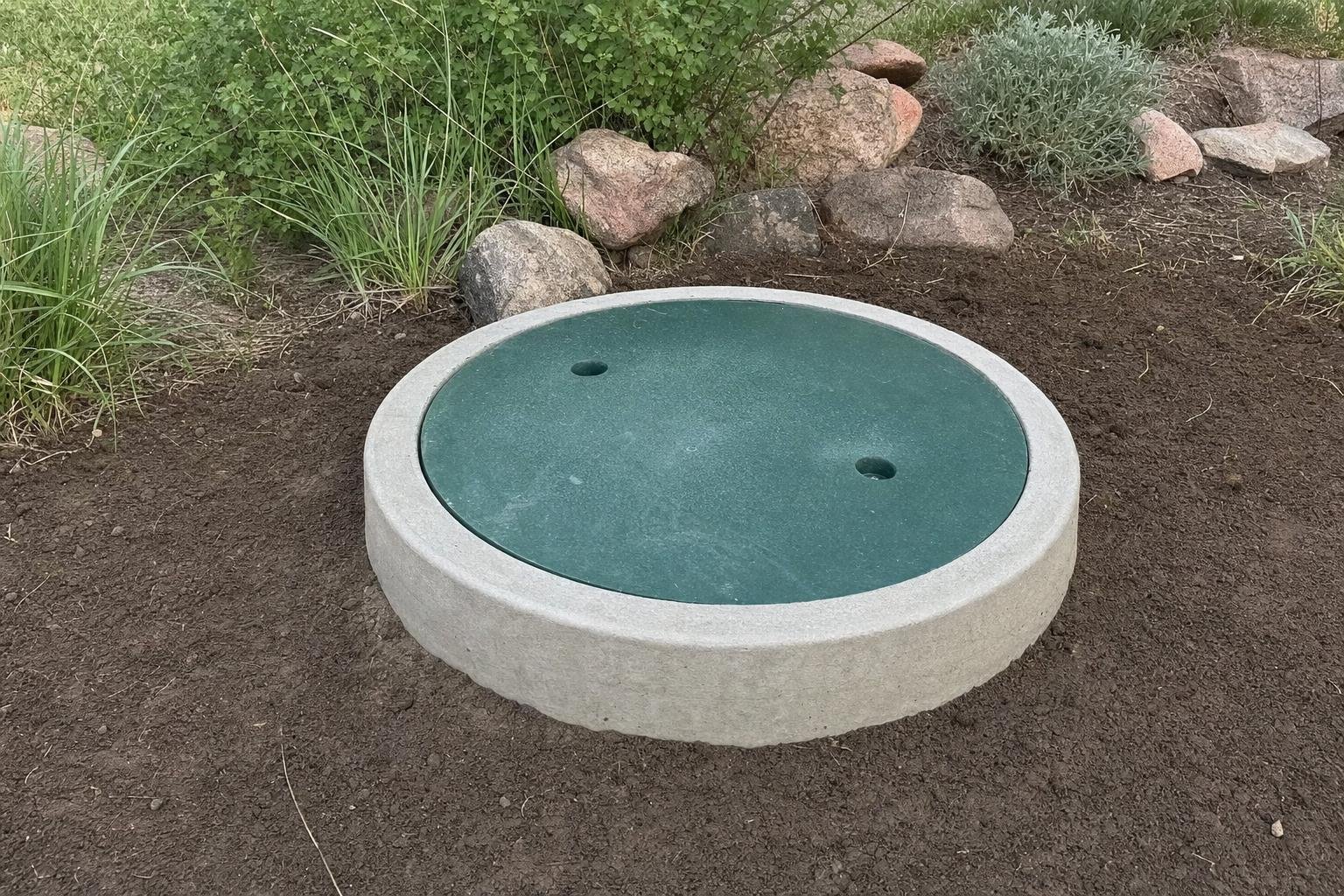
If the lid is buried and you are tired of digging it out every time, ask us about a riser with a gasket-sealed access lid. The final number depends on how deep the tank opening sits, which we measure on site.
Signs you should call now
Call us instead of waiting for the next routine pumping if the yard over the drainfield stays wet when it has not rained, or if drains inside the house have gotten slow. Those are the same signs we look for when we walk the drainfield, and they tend to get worse, not better.
Tell us on the call what you are seeing and when it started. We will talk through a typical range right then, and the firm price comes after we have looked at the lot and the tank access.
What It Typically Costs
Read these as planning figures, and you get a written price for your own job before you commit.
$250–$400
$300–$900
$300–$550
Questions Welcome
A quick call is a fine place to start, no hard sell.
Updated October 2026